Creating a cosy and inviting living room is about more than just a nice arrangement of furniture. It’s where you relax, spend time with family, and welcome friends – so making this space comfortable and warm is important. Whether you have a large lounge or a compact sitting area, there are plenty of ways to transform it into a cosy haven.
In this post, we’ll share practical tips and ideas to help you create a living room that feels inviting and comfortable all year round.
1. Choose Warm and Soothing Colours
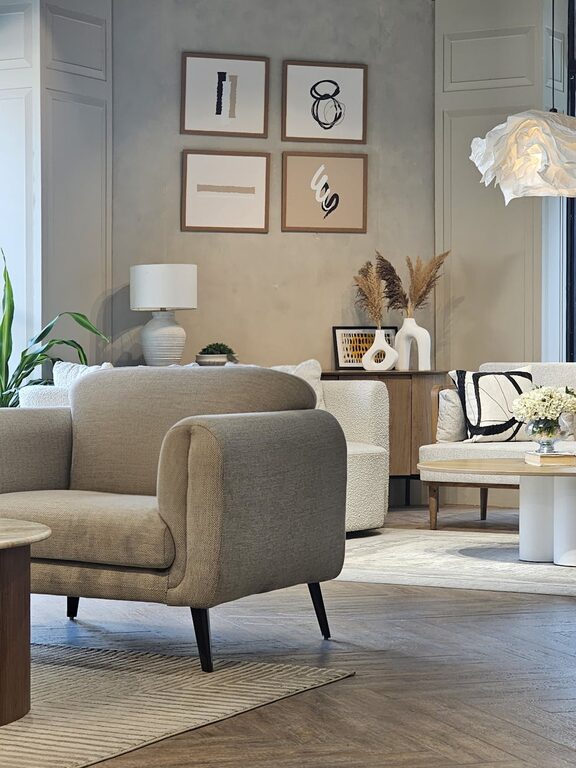
Colour sets the mood of any room. For a cosy living room, opt for warm, neutral tones like soft beiges, creamy whites, warm greys, or muted taupes. These shades create a calm and welcoming backdrop.
If you prefer a bit of colour, look for earthy tones such as terracotta, olive green or deep blues which add richness without overwhelming the space. Avoid overly bright or cold colours, which can feel stark or energising rather than relaxing.
Tip:
Use accent cushions or throws to add pops of colour that are easy to change with the seasons or your mood.
2. Layer Your Lighting
Lighting plays a crucial role in setting a cosy atmosphere. Instead of relying on a single overhead light, create layers of light throughout the room.
– Use table lamps, floor lamps, and wall sconces to add soft, indirect lighting.
– Consider warm white bulbs (2700K-3000K) for a softer glow.
– Add candles or fairy lights for extra warmth and ambience, especially in the evenings.
Tip:
Dimmers can be a great addition, allowing you to adjust the brightness depending on the time of day or occasion.
3. Invest in Comfortable Seating
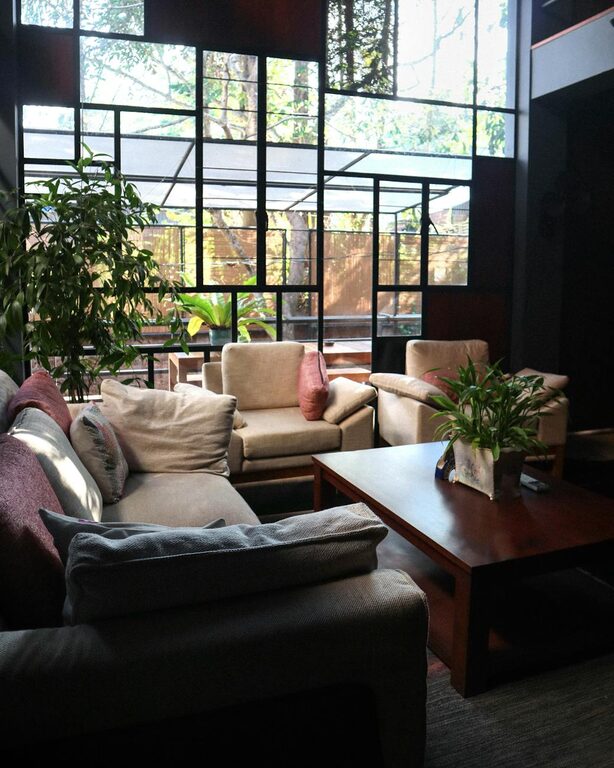
Your living room should be a place to relax, so comfortable seating is a must. Whether it’s a large sofa, cosy armchairs, or even a window seat, choose pieces that encourage you to sit down and unwind.
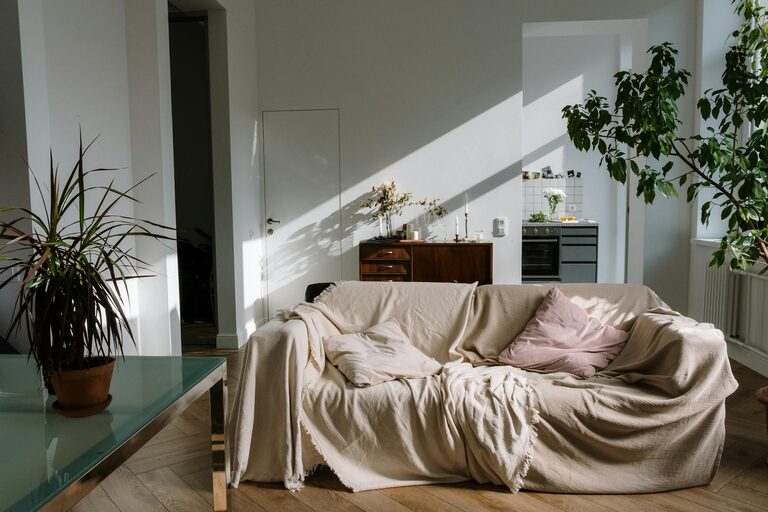
Look for sofas with plush cushions and soft fabrics like velvet, chenille, or cotton blends. Add plenty of cushions and soft throw blankets for an added layer of comfort.
Tip:
Mix and match seating options to accommodate different visitors and activities. A couple of poufs, stools, or bean bags can provide flexible seating when needed.
4. Add Textures for Depth and Warmth
Texture is a great way to add interest and a tactile sense of warmth to your living room.
Try incorporating materials like:
– Soft wool or faux fur throws and rugs
– Linen or cotton cushions and curtains
– Wooden furniture or accents like a coffee table, side tables, or shelving
– Wicker or rattan baskets for storage
By combining different textures, you create a layered look that feels homely and inviting.
5. Use Rugs to Define and Warm the Space
A rug can anchor your living room, add colour, and provide softness underfoot. Choose a rug that is proportionate to your seating area so it brings everything together.
Natural fibre rugs such as jute or wool are great for adding warmth. Alternatively, patterned rugs can introduce personality and charm.
Tip:
Ensure your rug is large enough for at least the front legs of your furniture to sit on it. This helps visually unify the seating arrangement.
6. Personalise with Meaningful Decorations
Nothing makes a space feel more inviting than pieces with sentimental value or thoughtful decor.
Consider:
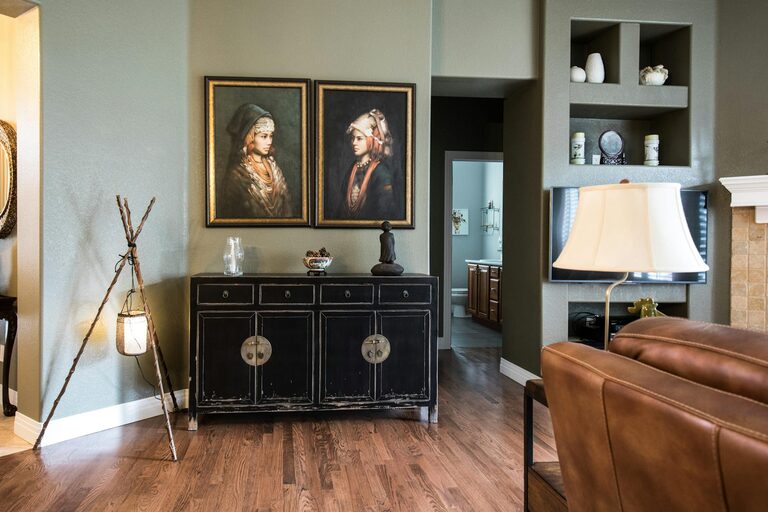
– Displaying family photos or artwork that you love
– Adding books, plants, or travel souvenirs on shelves or coffee tables
– Choosing cushions or throws that reflect your style
Personal touches remind you that this is your space to relax and feel at home.
7. Include Natural Elements
Bringing nature indoors is a simple way to add freshness and warmth to your living room.
Houseplants are an excellent choice – they improve air quality and provide a calming presence. Even one or two carefully placed plants can brighten the room.
Natural materials like wood, stone, and woven fibres also create a connection with the outdoors, which can be very comforting.
8. Keep Clutter to a Minimum
While it’s nice to personalise your living room, too much clutter can make the space feel crowded or chaotic rather than cosy.
Use smart storage solutions such as:
– Baskets and boxes tucked under tables or on shelves
– Furniture with built-in storage like ottomans or sideboards
– Wall-mounted shelves to keep surfaces clear
Aim for a balance where your room is tidy but still feels lived-in and welcoming.
9. Create Zones for Different Activities
If your living room serves multiple functions – such as watching TV, reading, or socialising – consider dividing it into zones. This helps keep the space organised and allows everyone to enjoy their preferred activity.
For example:
– A reading nook with a comfy armchair, lamp, and small side table
– A conversation area arranged around the sofa and coffee table
– A media zone with a TV and sound system positioned for easy viewing
Using rugs, lighting, or furniture placement can help define these areas without closing off the space.
10. Maintain a Comfortable Temperature
Finally, the right temperature is essential for comfort. Make sure your living room isn’t too cold or stuffy.
– Use curtains or blinds to keep heat in during colder months
– Consider a small heater, radiator, or open fireplace for warmth
– In warmer seasons, ensure good ventilation or use fans to stay cool
Comfortable temperature control makes your living room inviting no matter the weather.
—
Summary
A cosy and inviting living room combines warmth, comfort, and personal style. By choosing soothing colours, layered lighting, soft textures, and comfortable seating, you can create a space that welcomes you and your guests. Adding natural elements, keeping clutter low, and defining activity zones further enhance comfort and practicality.
Remember, making your living room cosy is about creating an environment where you feel relaxed and truly at home. Start with a few changes and enjoy the transformation!
—
If you have any questions or want to share your own cosy living room tips, feel free to leave a comment below. Happy decorating!
About the Author